UC Irvine has seen a substantial decrease in daily campus traffic, even as its student body has expanded. Since 2016, the university's student population has grown by 14 percent, while the number of vehicles entering campus has declined by 47 percent. This shift is the result of years of intentional planning aimed at accommodating growth without increasing local transportation burdens.
Approximately 83 percent of the UC Irvine community currently uses some form of sustainable transportation. This includes walking, biking, public transit, carpooling, telecommuting, and driving zero-emission vehicles. The university's approach has been to create more housing on campus, expand transportation choices, and facilitate opportunities for individuals to reduce car dependency.
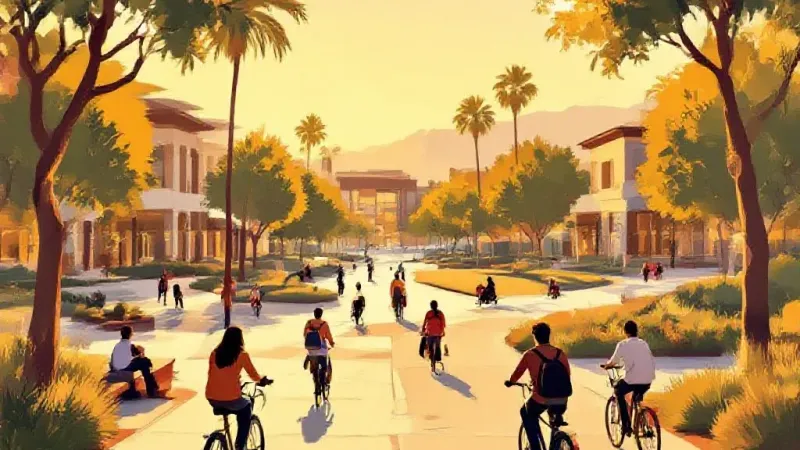
Specific initiatives have supported this transition. In 2018, UC Irvine became the first college in the nation to convert its entire biodiesel shuttle fleet to an all-electric bus system. Students receive discounted fares for Metrolink and OCTA transit services, and employees driving electric vehicles are offered complimentary charging for three years. The campus has also invested in expanding its bicycle infrastructure, alongside implementing carpool matching programs and personalized commute planning to encourage alternatives to single-occupant vehicle travel.
Perhaps the most impactful strategy in reducing traffic has involved housing. Ron Fleming, executive director of transportation and distribution services at UC Irvine, stated that "the best transportation investment isn’t a road... It’s housing," explaining that when students reside close to their classrooms, it significantly reduces daily vehicle trips. This approach aims to strengthen campus life and lessen the overall traffic impact on the surrounding community. The university views housing and transportation as integral parts of a unified strategy.
Every student living within walking or biking distance of academic buildings eliminates hundreds of commute trips over an academic year. The practical adoption of sustainable transportation is evident in individual choices. For instance, Melissa Perez, a 2026 social ecology graduate, regularly used Metrolink from Fullerton for her commute. Similarly, Associate Chancellor Lars Walton bikes between Orange and the campus three days a week.
Looking ahead, UC Irvine is developing its new long-range development plan, named Envision. This plan will build upon the successes in sustainable transportation, making these efforts a fundamental component of the campus's future physical development. Housing will remain a key element of this future, complemented by ongoing investments in public transit, electric buses, and improved infrastructure for pedestrians and cyclists. The overarching goal is to make it simpler for students, faculty, and staff to live closer to campus and have diverse choices for their daily commutes.
UC Irvine’s experience over the past decade demonstrates that accommodating a growing university population does not inherently necessitate an increase in vehicular traffic. Through deliberate planning and sustained investment in alternative transportation and housing, the institution has shown it is possible to serve more people while concurrently reducing transportation-related impacts on the local area.