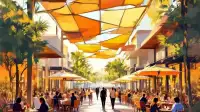

Irvine is celebrating its 50th birthday, a milestone that offers a moment to reflect on the city's development and its historical underpinnings. Early Irvine Company planner Al Treviño has described the city as “a resounding success” after these five decades of growth and planning. The city’s quality of life is, in part, attributed to the creativity of Pereira, whose vision played a role in its establishment and design. Many of Irvine’s street names provide a glimpse into the city's past, with examples such as Jamboree Road, which was built and named for a specific historical event.
One functional piece of Irvine’s early history involves its postal service. The East Irvine Post Office, for example, received its new designation on October 12, 1965. Postmaster William A. Cook was responsible for hanging the sign that officially renamed this facility. Before this change, the post office had been operating out of a general store, a practice that dated back to 1911. This evolution points to the gradual establishment of permanent infrastructure for residents as the area developed beyond its initial agricultural roots.
Beyond basic services, Irvine also played a part in early regional aviation. In 1923, aviator Eddie Martin established Orange County’s first airport. This pioneering facility was created on a leased patch of The Irvine Ranch. This historical detail underscores how the extensive lands of The Irvine Ranch facilitated various ventures, including those in emerging technologies like aviation, which would later influence regional development.
For residents interested in exploring these historical roots firsthand, Old Town Irvine offers accessible opportunities. Free guided tours are available, covering a significant historic building, a former blacksmith shop, and the prominent grain silos. These tours provide a comprehensive look at the industrial and community foundations of early Irvine. The tours are offered to the public on the second Sunday of each month, commencing at noon. Participants should meet at the La Quinta Inn lobby, located on Sand Canyon Avenue, to join. Led by volunteer docents, each tour lasts approximately one hour, offering a focused and engaging way for residents to connect with the physical remnants of Irvine's past. These guided experiences aim to inform residents about the tangible heritage that precedes the modern city, showcasing structures that were central to daily life and commerce decades ago. They provide a direct pathway to understanding the transformations Irvine has undergone, from its ranching and agricultural origins to its current status as a planned city.